
Credit Basics — How Credit Works and Why It Affects Your Quality of Life.
Credit is more than just a number on a report. It influences where you live, how much you pay for everyday necessities, and the opportunities available to you. Understanding how credit works is the first step toward improving not only your credit score, but your overall quality of life.
At LetsBuildCredit.com, we focus on education and responsible strategies — not shortcuts — to help you make informed credit decisions.
What Is Credit?
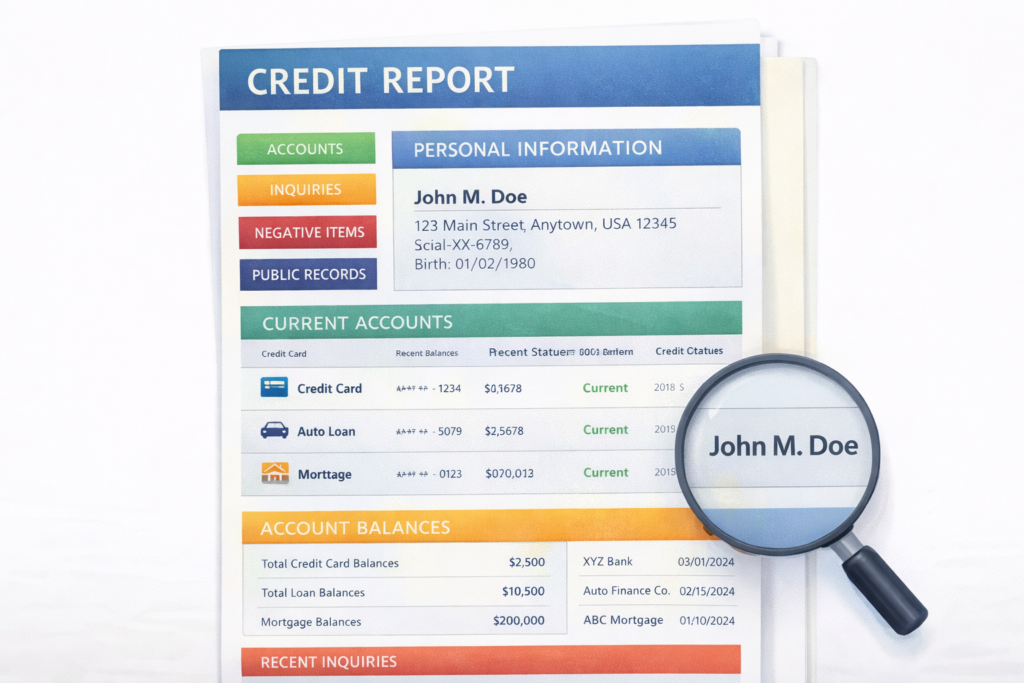
Credit is the ability to borrow money or access goods and services with the promise to repay later. Lenders use your credit history to decide:
- Whether to approve you
- How much they’re willing to lend
- What interest rate or terms you’ll receive
Your credit history is tracked and summarized in your credit report, and your behavior is reflected in a credit score.
What Is a Credit Score?
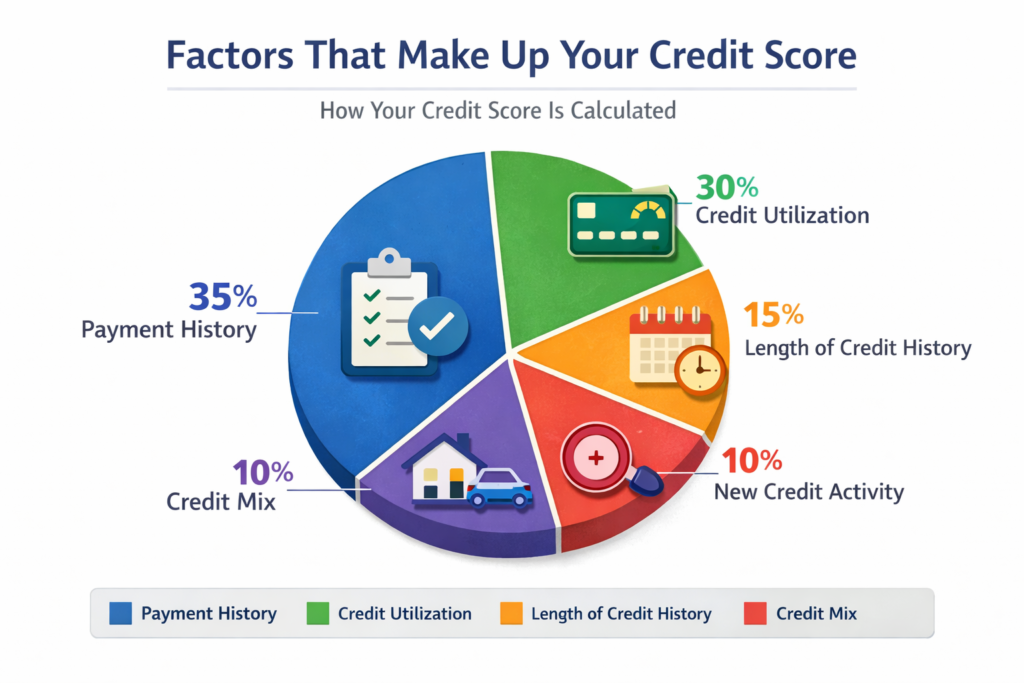
A credit score is a numerical summary of your credit behavior. It helps lenders quickly assess risk.
While scoring models vary, most consider these core factors:
🔹 Payment History
Do you pay your bills on time?
🔹 Credit Utilization
How much of your available credit are you using?
🔹 Length of Credit History
How long have you been using credit?
🔹 Credit Mix
Do you manage different types of credit responsibly?
🔹 New Credit Activity
How often are you applying for new accounts?
Each of these factors reflects habits — not income or personal worth.
How Credit Affects Your Purchasing Power
Your credit directly impacts how far your money goes.
With stronger credit, you may qualify for:
- Lower interest rates
- Better loan terms
- Higher approval limits
With weaker credit, borrowing often costs more — sometimes much more — over time. That difference can affect monthly budgets, savings goals, and long-term financial stability.
How Credit Impacts Everyday Life
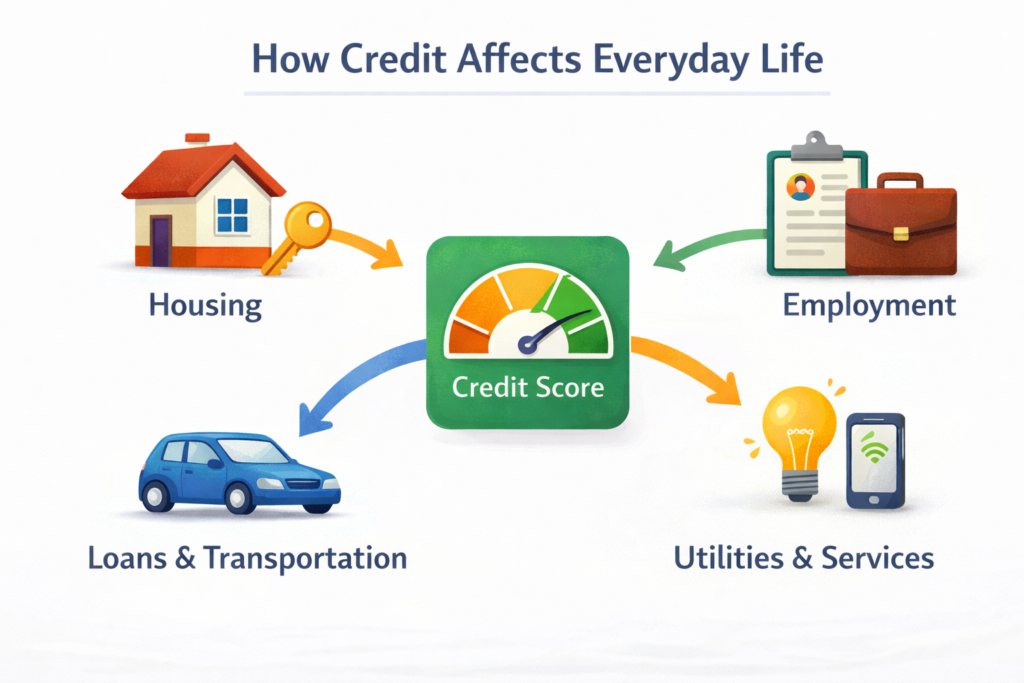
Credit influences many areas beyond loans and credit cards.
🏠 Housing
Landlords often review credit when approving rentals. Stronger credit can mean:
- More housing options
- Lower security deposits
- Faster approvals
🚗 Transportation
Auto loans, leases, and even insurance rates can be affected by credit history.
⚡ Utilities and Services
Poor credit may require deposits for:
- Electricity
- Internet
- Cell phone plans
💼 Employment Considerations
For certain roles, employers may review a version of a credit report (not a credit score) as part of the hiring process. The Federal Trade Commission (FTC) explains when and how credit reports may be used for employment purposes.
Credit and Quality of Life
Improving your credit isn’t about chasing a perfect score — it’s about reducing stress and increasing flexibility.
Better credit can lead to:
- More financial confidence
- Fewer barriers when life changes
- Greater control over long-term decisions
- Improved access to opportunities
When credit improves, many people experience a noticeable improvement in day-to-day peace of mind. As USA.gov notes, understanding credit and debt is an important part of long-term financial stability and personal well-being.
Common Credit Myths
❌ “Checking your credit hurts your score”
Checking your own credit does not hurt your score.
❌ “You need debt to build credit”
Responsible use of credit matters more than carrying balances.
❌ “Bad credit is permanent”
Credit can improve over time with consistent habits.
Responsible Credit Use Starts With Education
Credit is a tool. Like any tool, it can help or hurt depending on how it’s used.
Learning how credit works allows you to:
- Avoid costly mistakes
- Make informed choices
- Build habits that support long-term stability
That’s why education is the foundation of everything we publish.
What’s Next?
If you’re ready to take the next step:
- 👉 Learn how to build credit responsibly
- 👉 Explore ways to reduce debt
- 👉 Understand options for fixing bad credit
- 👉 Learn how credit cards can be used as tools, not crutches
If you’re dealing with past mistakes, learn how to fix bad credit and rebuild your credit profile over time.
Our goal is simple: help you improve your credit in a way that supports a better quality of life — now and in the future.